Tsukubai · “to crouch down”
The tsukubai at the entrance
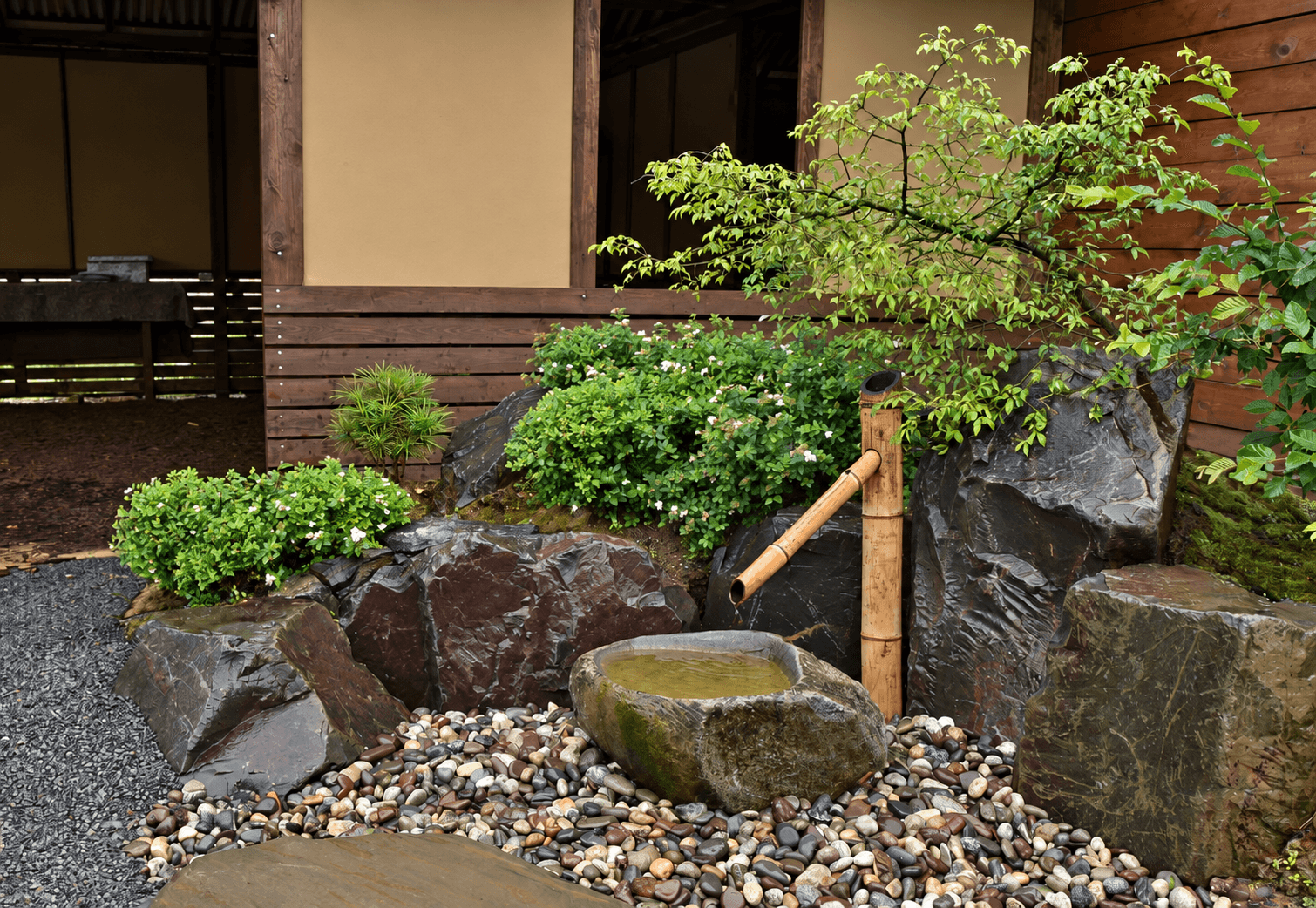
A stone basin for washing in the entrance area. The first finished feature of the park.
What it is
The word comes from the Japanese verb *tsukubau* — “to crouch, to bow”. To use a tsukubai you have to stoop slightly: a gesture of humility and respect for the moment.
It is there for ritual purification before the tea ceremony or meditation, as a symbol of inner cleanliness — and simply for beauty: the quiet sound of dripping water settles you into contemplation. Tsukubai first appeared in Buddhist temples and later became part of tea gardens.
How ours is made
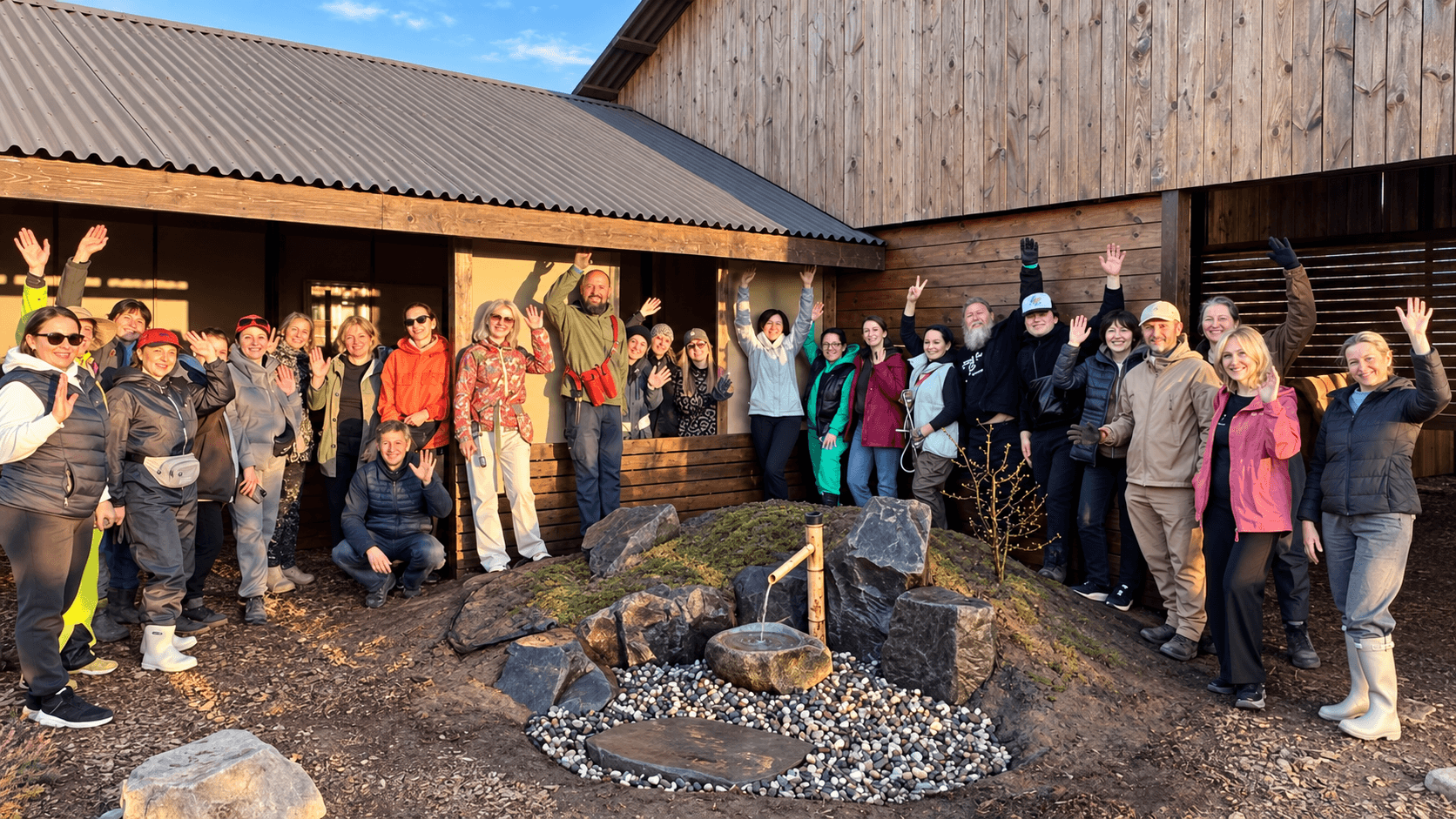
Built on 2–3 May 2026 at a practical session for graduates of the Japanese Garden course, led by Irina Andrianova and Andrey Darusenkov.
“We lifted the moss carefully, dug the plants out gently, cleared the space. We shaped the ground, chose every stone together, talked it over, felt our way. No, not everything worked the first time — but real experience is born precisely in correcting mistakes.”
“A tsukubai is a place of purification: before entering the garden, a person leaves the bustle behind. It matters to me that every guest of our park feels that crossing — from a world of hurry into a space of quiet and contemplation.”
- Where
- the entrance area of the park
- When
- 2–3 May 2026
- Led by
- Irina Andrianova, Andrey Darusenkov
- Status
- Finished
The sound of water running into the basin.
How it was built
How the tsukubai came to be
Two days of work by the course graduates — and where there had been bare ground in the morning, an ensemble of stone and water was playing by evening.