The people
Who is making this garden
A Japanese garden begins with the people who make it.

Founder and owner of the park
Alla Lesheva
The person who conceived a Japanese garden outside Moscow — and then went to study so as to build it by the rules.
“Alla Lesheva designed her own park, Rain Lines, while she was studying on my course. Even then you could see the whole scale, the whole force of what she had in mind,” says Irina Andrianova.
The studying began before the building work: a practical class on shaping niwaki from conifers at the Niwaki nursery, the Tree Architect 3.0 course (June 2024), two years of trips to Japanese gardens, the Japanese Garden course.
“We have got seriously carried away with trees!) There are many secrets still to master before you understand the life and the language of trees. I will say it plainly — it draws you in, and it helps you live in harmony.”
Alla has run the park's channel from day one and takes part in the work on site herself.
- Course
- Tree Architect 3.0, Niwaki nursery, 9 June 2024
- Park
- 17,000 sq m, Lyubertsy district
- Channel
- Rain Lines Japanese Garden | Ame no sen teien
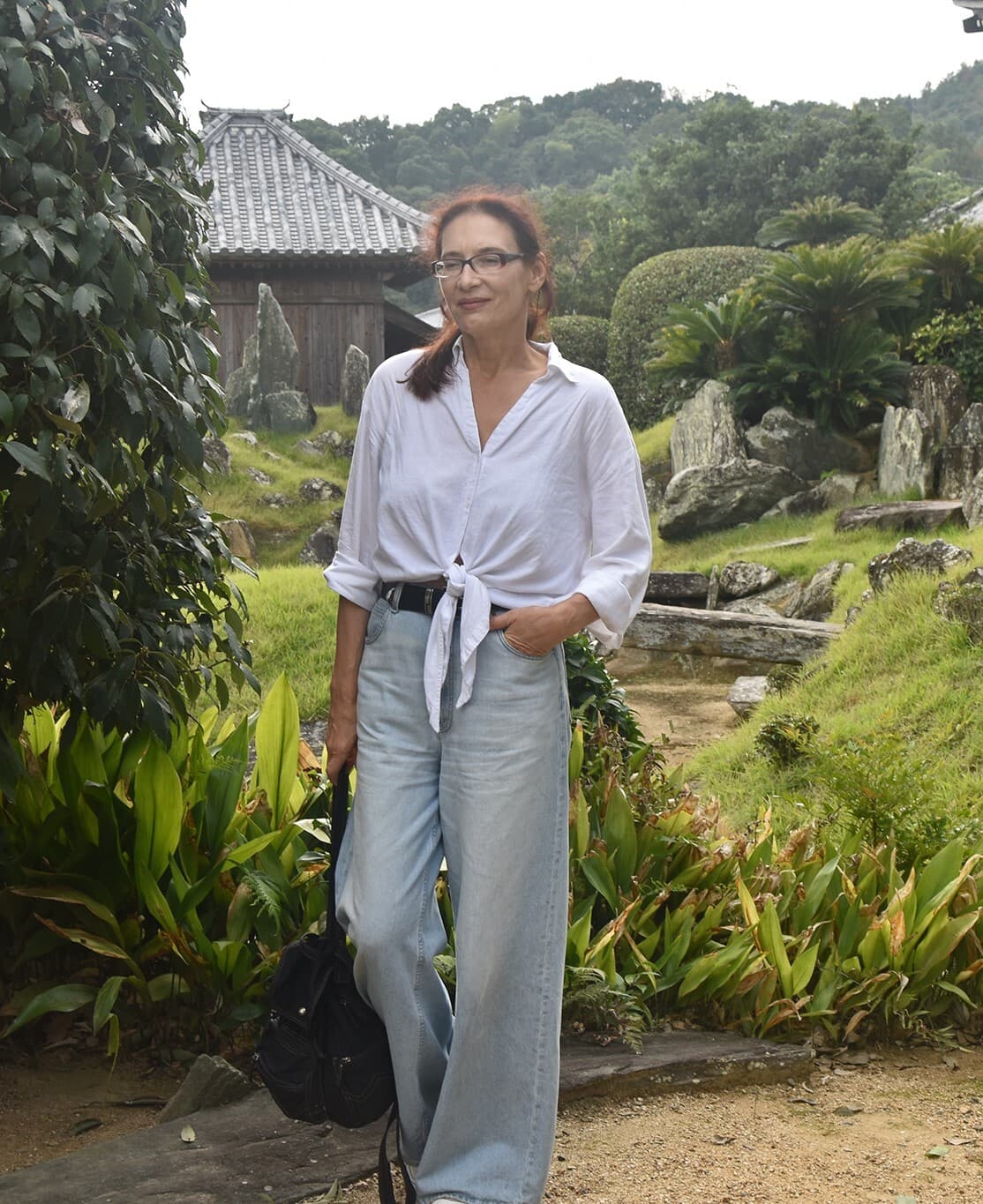
Landscape architect of the project
Irina Andrianova
The person the park owes its meaning to: from the tsukubai at the entrance to the Beginning garden by the stage.
She has been studying Japanese gardens since 2005. Together with Vladimir Einarov she has created more than 50 projects — from gardens of a hundred square metres to two hectares, mostly around Moscow.
Author of the course “The Japanese Garden: from dream to reality”, taught at Andrey Darusenkov's Bonsai and Niwaki Workshop, and of the book “The Japanese Garden: learning from the Japanese, building at home”. She writes articles about Japanese gardens.
Author of the concept of the Beginning garden: “For the idea I took the cosmogonic conception of the structure of the universe that came from India.” The form was suggested by Mirei Shigemori's Yūrin garden, which she and Vladimir saw in Japan in October 2025.
“Rain Lines is a grand project. In time it will be the most beautiful Japanese garden outside Japan.”
- Japanese gardens
- since 2005
- Projects
- more than 50, from 100 sq m to 2 hectares
- Course
- “The Japanese Garden: from dream to reality”
- Book
- “The Japanese Garden: learning from the Japanese, building at home”
- In the park
- The Beginning garden, The tsukubai at the entrance
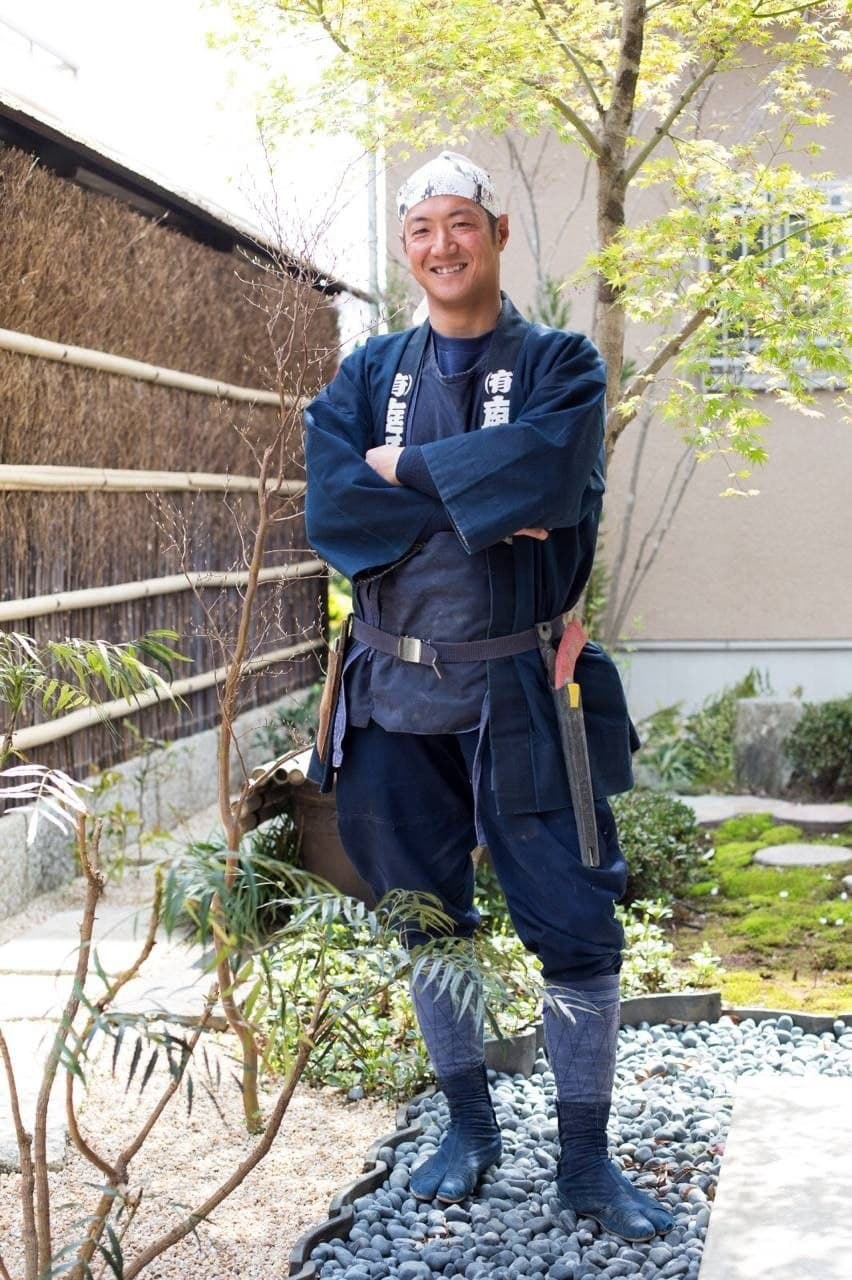
Master of Japanese gardens · Japan
Hiromi Hoshi
The author of the Japanese Garden in Krasnodar park. At Rain Lines — two waterfalls: one dry, one real.
In June 2025 he ran a workshop on the park's site on building the dry waterfall Ryūmonbaku. “Every stone was chosen by Hiromi and carries its own purpose and meaning. Not every master in Japan could do work like this.”
From 19 to 27 September 2026 he is leading the construction of the five-metre Yugenbaku waterfall: about a hundred tonnes of stone, nine days of work, a closed workshop. In Japan itself builds like this are rarely opened to study groups.
He was invited to the park by Irina Andrianova and Vladimir Einarov — they have been friends for many years.
- Known as
- the author of the Japanese Garden in Krasnodar park
- In the park
- Ryūmonbaku (2025), Yugenbaku (2026)
A growing list
Masters who have worked in the park
The list grows after every workshop.
- Teruki Kikuchi
- Japanese stone master. The Yugenbaku waterfall, September 2026
- Dmitry Baranov
- CEO of Green Arrow — organiser of the workshops
- Tree Architects Club
- Setting the stones of Horai island, September 2025
- Graduates of the Japanese Garden course
- The tsukubai and the Beginning garden, May 2026